Biophilic office design: a practical guide with examples from Berlin
What biophilic design does in an office, what it does not, and how to plan it so it lasts. With examples from a fully planted office floor in Berlin Friedrichshain.
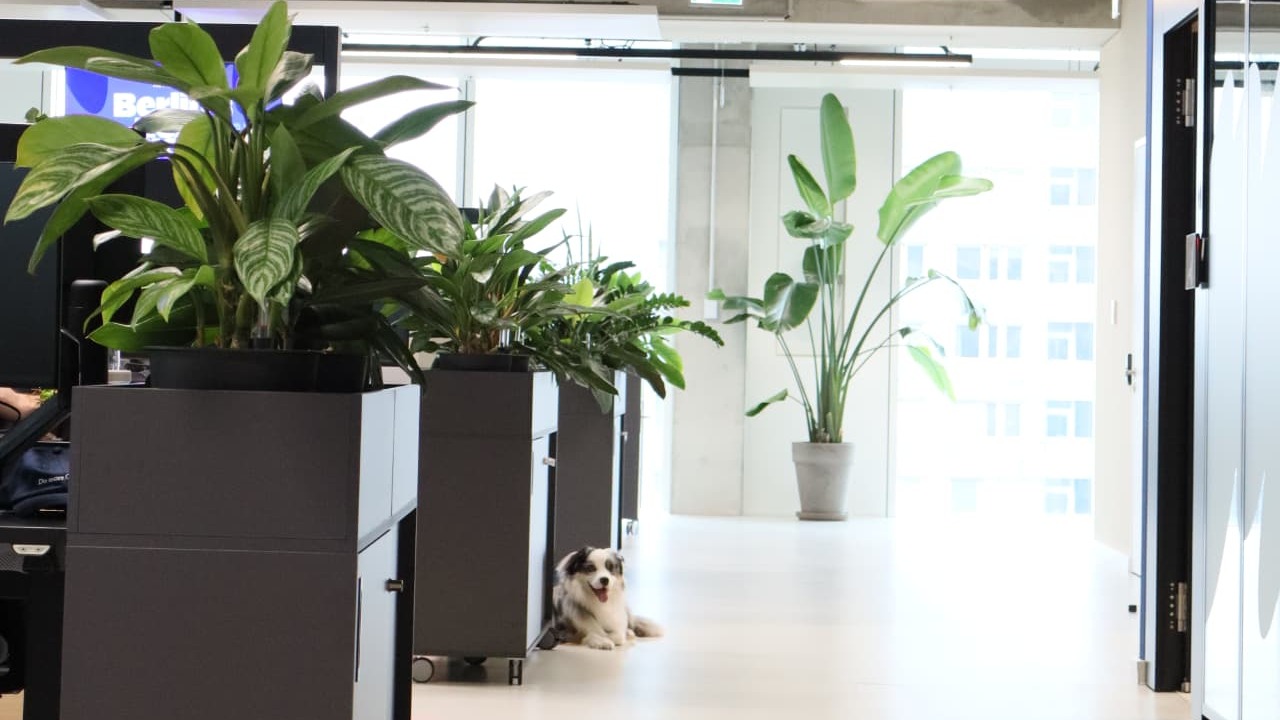
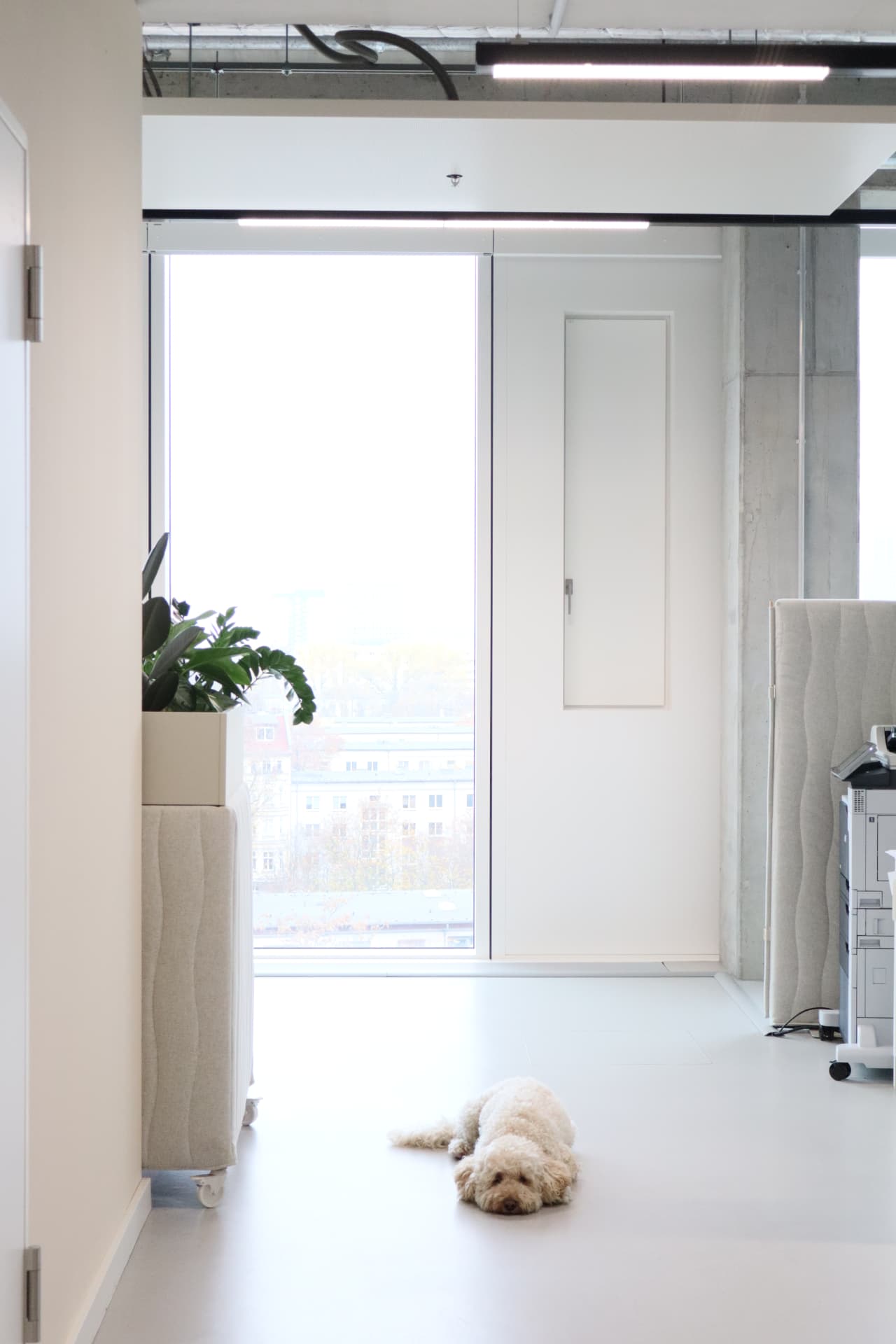
On the sixth floor of Almedia's office in Friedrichshain, the first thing you notice is not a plant. It is the office dog, in a corridor lined with planters that run the length of the walkway.
Nobody comes into the office for the plants. Take them away, though, and everyone would feel the difference.
That is biophilic design doing its job. Not a feature wall you photograph once, but a space people walk through every day that feels calmer and more human because of what grows in it.
This guide covers what biophilic design is, what plants in an office can and cannot do, and the five decisions that matter most when you plan it. The examples come from Almedia Berlin, an office designed by Studio Vale and planted and cared for by Plantclub.
What biophilic design is
Biophilic design means bringing nature into the places we live and work: plants, daylight, natural materials, natural shapes and a view of something green. The thinking is simple. People feel and work better when nature is part of their surroundings.
The idea is older than you might think, and it comes with a good reading list. Psychologist Erich Fromm first used the word biophilia, the love of living things, in The Heart of Man (1964). Biologist Edward O. Wilson made it famous with his book Biophilia (1984), arguing that our pull towards nature is something we evolved with.
Later, researchers including Stephen Kellert turned the idea into practical guidance for architects and interior designers, starting with Biophilic Design (2008, with Judith Heerwagen and Martin Mador). Two books are still the go-to references for offices: Terrapin Bright Green's 14 Patterns of Biophilic Design (2014), a hands-on guide for designers, and Kellert and Elizabeth Calabrese's The Practice of Biophilic Design (2015).
That last one makes the most useful point for any office: contact with nature has to be regular and ongoing. One plant in reception does not count.
What plants do, and what they don't
We are careful here, because this is where office plants get oversold.
What the research supports. A team of psychologists led by Marlon Nieuwenhuis at Cardiff University added plants to bare, minimal offices in the UK and the Netherlands, then compared them with offices left plant-free. People in the planted offices said they could concentrate better and were happier at work, and their measured productivity went up (2014).
In a smaller study, Min-sun Lee and colleagues asked 24 young adults to spend a short session repotting an indoor plant, and another on a computer task. After the plant session, they felt calmer and their blood pressure was lower (2015). Plants change how a space feels, and that changes how people use it.
What it does not support. Potted plants do not clean the air in an office in any way you would notice. Michael Waring, an environmental engineering professor at Drexel University in Philadelphia, and his doctoral student Bryan Cummings looked back over decades of studies and found you would need somewhere between 10 and 1,000 plants per square metre to match what a normal ventilation system already does (2019).
If a provider promises cleaner air from a few dozen pots, ask for the study. Plants are there to make people feel better in a space. That is reason enough.
Five decisions that make or break it
1. Start with how people move
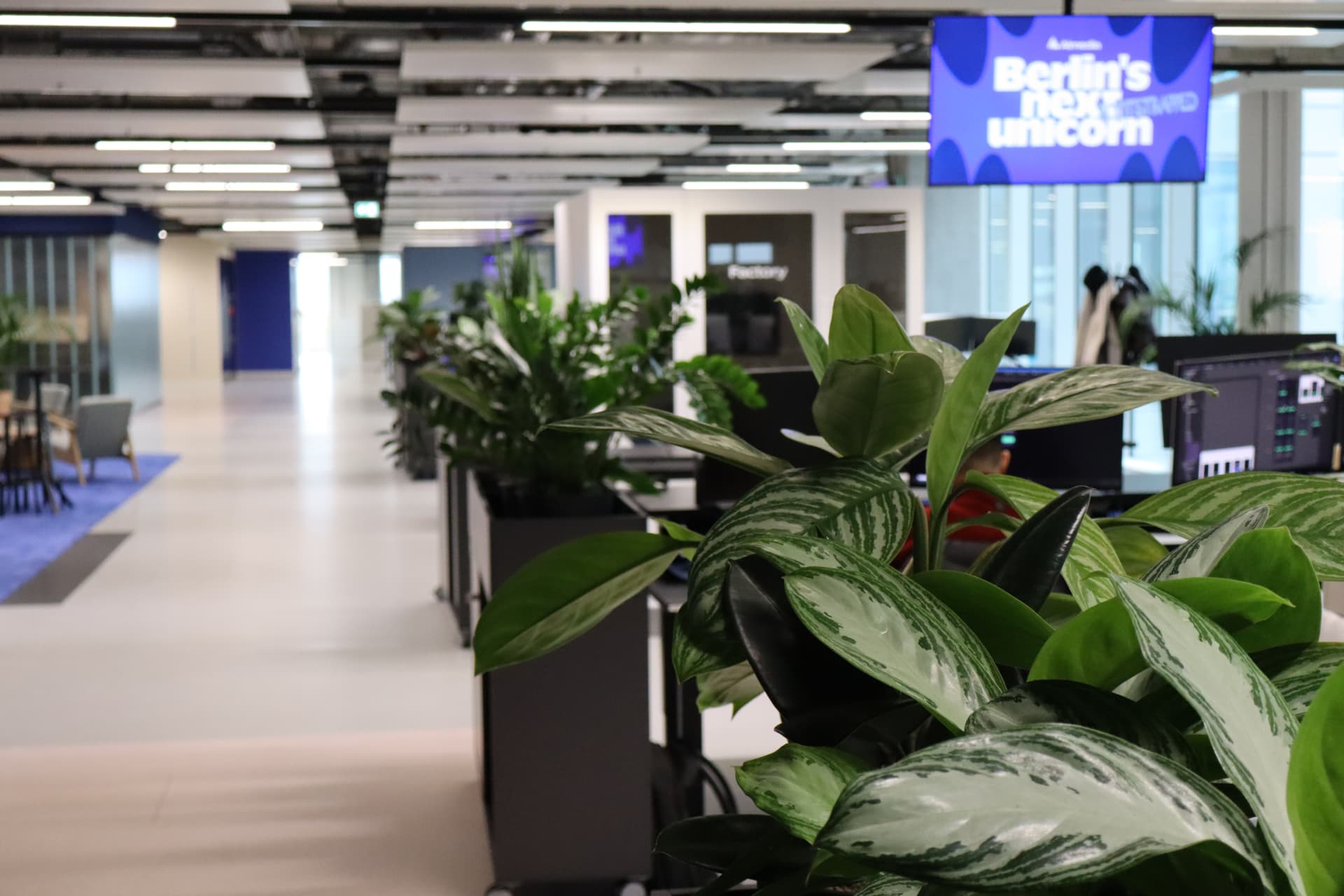
Plan plants around the routes people take, not the corners left over. At Almedia, long planters line the main aisle, so the plants frame the walk people make dozens of times a day. They also divide up the floor without adding walls.
2. Go big enough to feel like a landscape
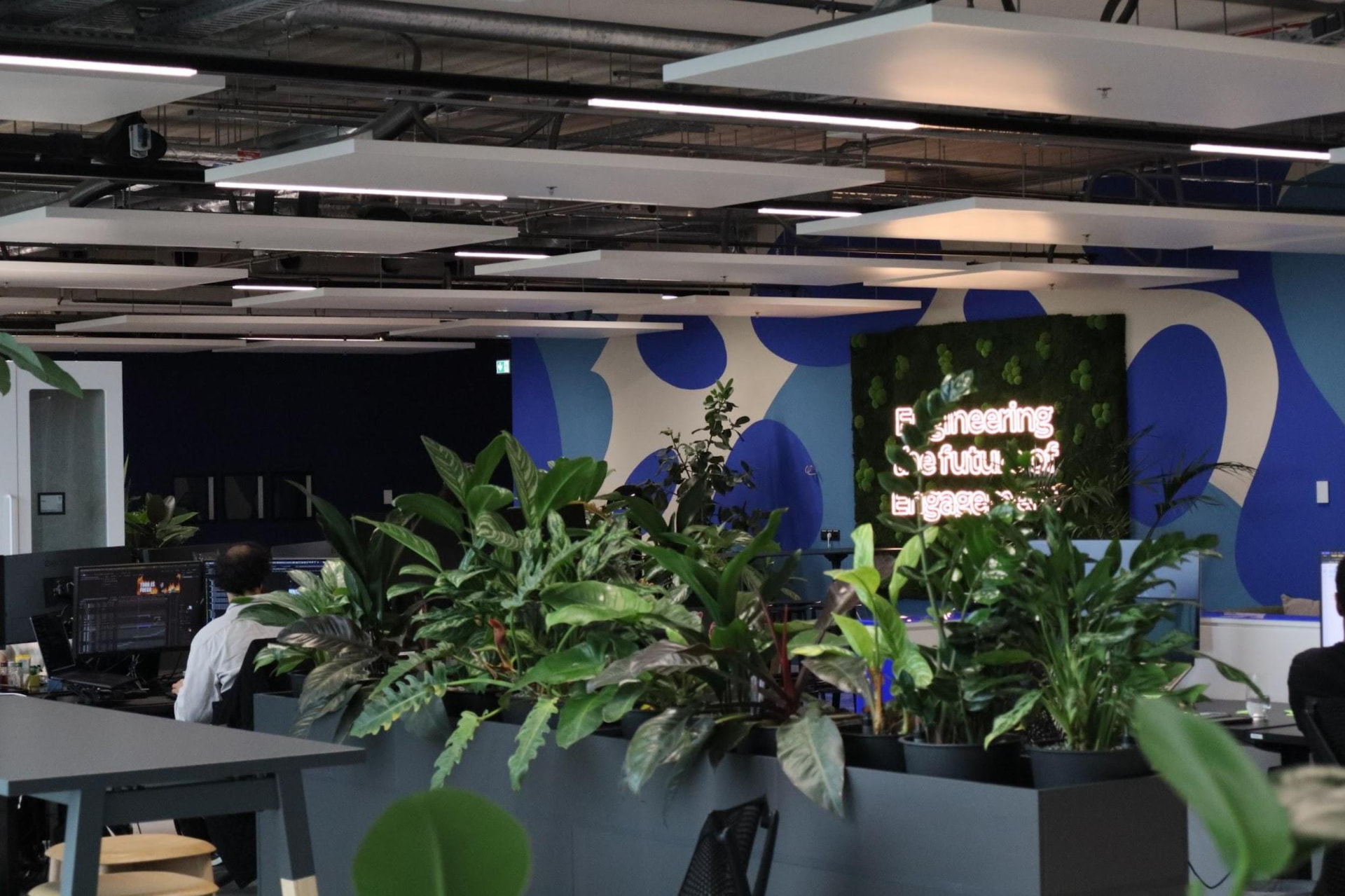
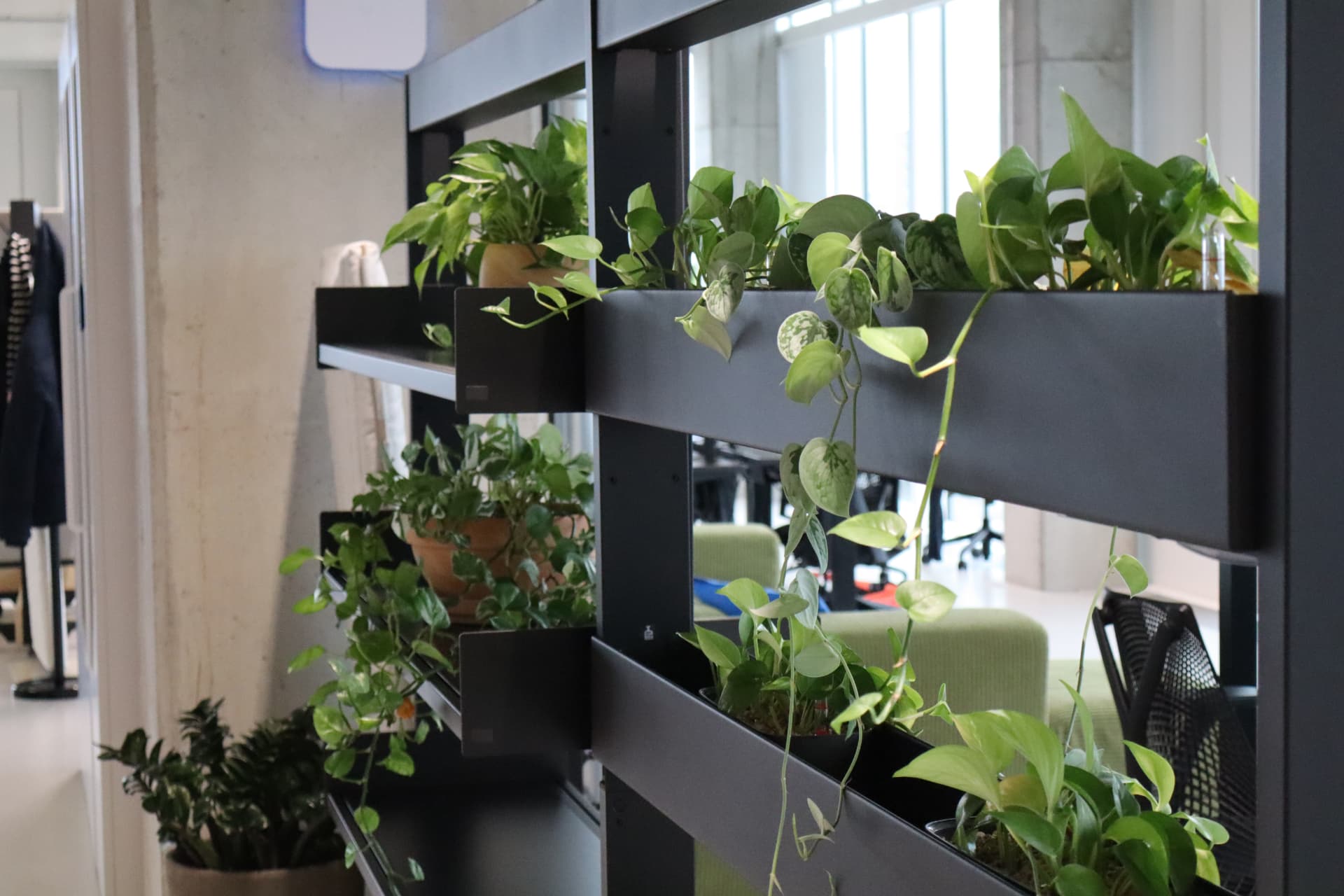
A handful of plants reads as decoration. Enough plants, repeated through the space, read as a landscape. Almedia's floor carries just over 300 plants, from tall floor palms down to trailing shelf plants, with planters built into the furniture and a planted wall.
Repetition creates calm. Variety in size and leaf keeps it from feeling uniform.
3. Use the best light, and respect the rest
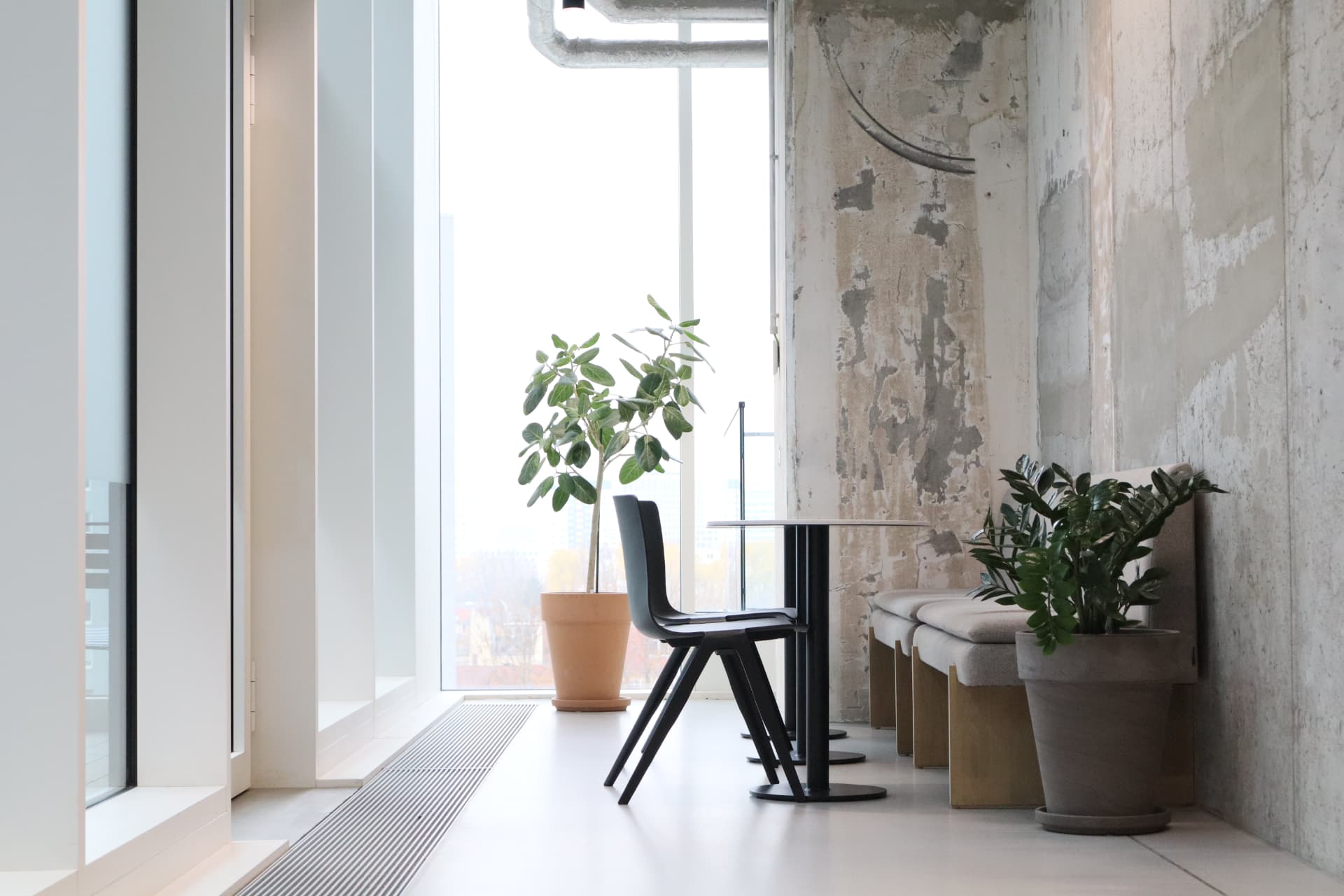
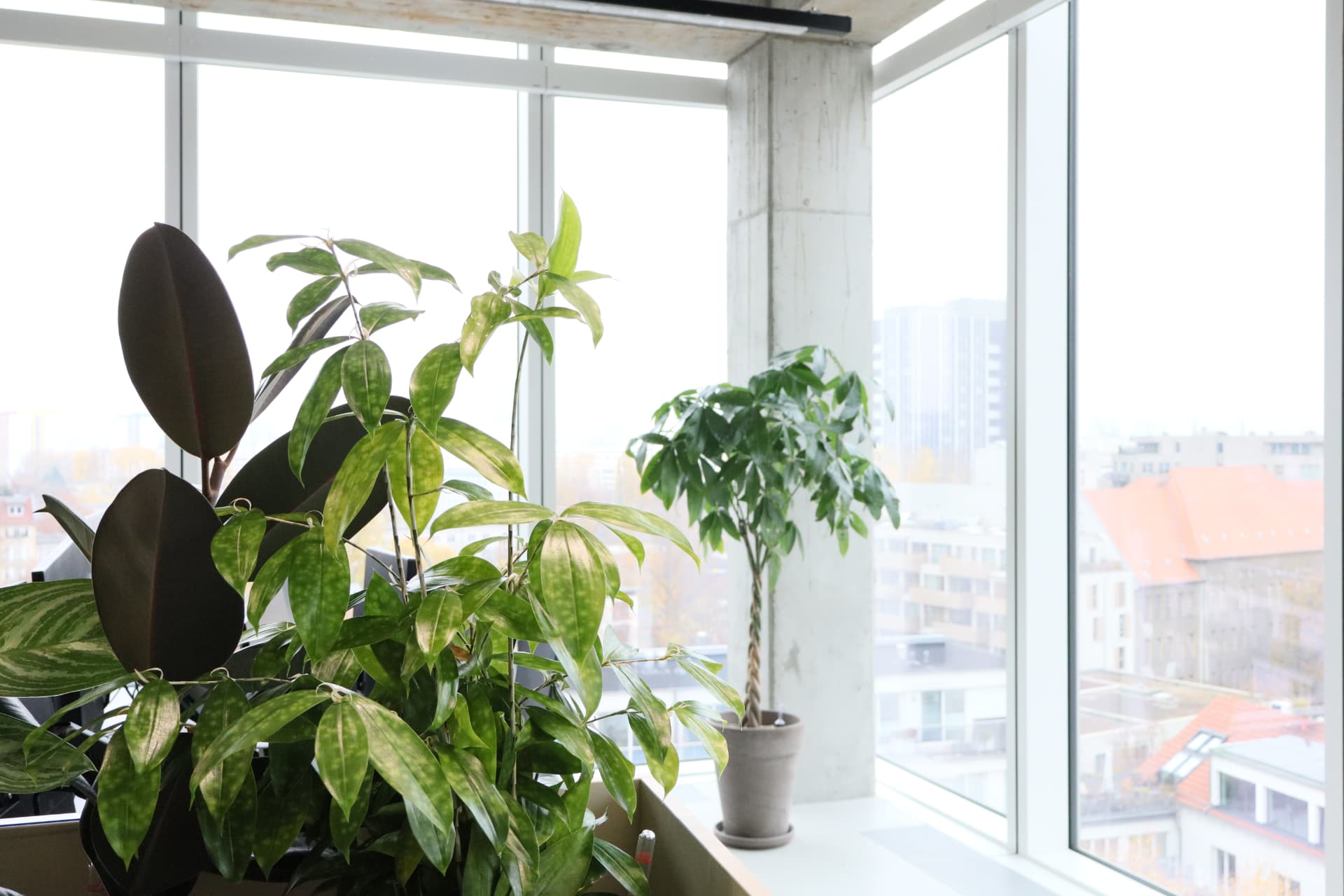
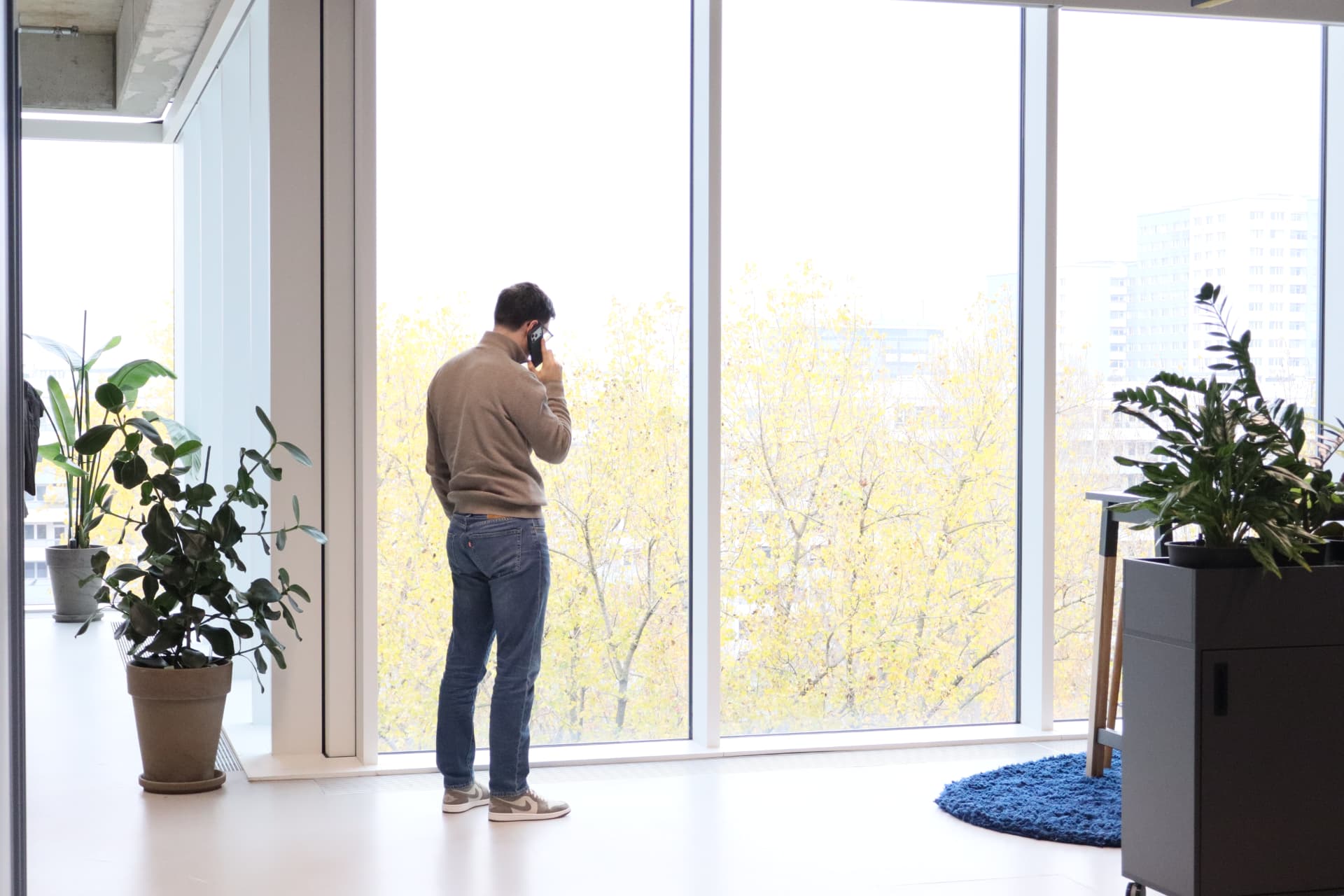
The window seats are where people choose to sit. They are also where plants work hardest.
Our care notes for this office are specific: plants in the window corners need more water, especially in summer. Plants in the darker parts of the floor need far less and drown easily, so they are always checked before watering.
Good design puts light-loving plants where the light is and tougher, low-light plants further in. Good care adjusts to each spot instead of watering everything the same way.
4. Design plants in from the start
The best offices treat plants like furniture or lighting: part of the plan, not an afterthought. Studio Vale's interior for Almedia is relaxed and professional, with the company's brand woven through everyday spaces.
The planting follows the same idea. Plants sit beside lounge chairs, inside shelving and next to the logo wall, in pots chosen to match the colours. Nothing looks added afterwards.
If you are working with an interior designer, bring your plant partner in at the concept stage. Every plant is then chosen, potted and placed by experts for the light it will live in and the job it does in the room. With Plantclub, there is no fee for the consultation or the concept, so bringing us in early costs you nothing extra.

5. Plan for care from day one
This is the decision most offices skip, and it is why so many green offices start to look tired within months.
The most sustainable thing we can do is keep the plants alive. At Almedia, a Plantclub Plant Expert visits every two weeks.
Not every plant gets the same treatment. ZZ plants, Snake Plants, and Aspidistras can take a lot less water than your Strelizia's and Kentia's. Any plant that struggles is replaced as part of the membership, so the design still looks the way it did on day one.
A note on office dogs
Plenty of offices have a dog on the team, Almedia included. Some of the most dependable office plants, including pothos, dracaena and philodendron, are toxic to dogs if chewed.
That does not rule them out, but it informs how designers use them: trailing plants up high, large floor plants where a dog is unlikely to chew, and dog-safe plants like the Kentia palm wherever a curious dog likes to spend time. Tell your plant partner about the dog before the design, not after.
What it costs
Plantclub publishes its prices, because planning a budget should be simple. Memberships start at €200 per month for offices up to 150 m² (Greenhouse), with Woodland from €400 (up to 500 m²), Jungle from €600 (up to 1,000 m²), and Rainforest for larger custom installs. All prices exclude VAT. Every tier includes design, installation, plant replacements and care visits every two weeks.
Curious about buying plants instead? We have you covered. Our job is the long-term health of your plants, and for some teams owning them is the better fit. Purchased plants do not come with free replacements after the four-week guarantee, but our Plant Experts will set you up for success with advice on light, watering and placement.
Start with a conversation
If you are planning a new office, a move or a refresh in Berlin, book a free consultation. We will walk the space with you, look at the light and how your team uses the floor, and show you what a biophilic plan could look like for your office.